
Pawilon Edukacyjny Kamień (Educational pavilion - Kamień)
Wybrzeże Puckie 1, WarszawaWorkshops, walks and educational cruises. Find the current programme and registration in the organiser’s calendar.

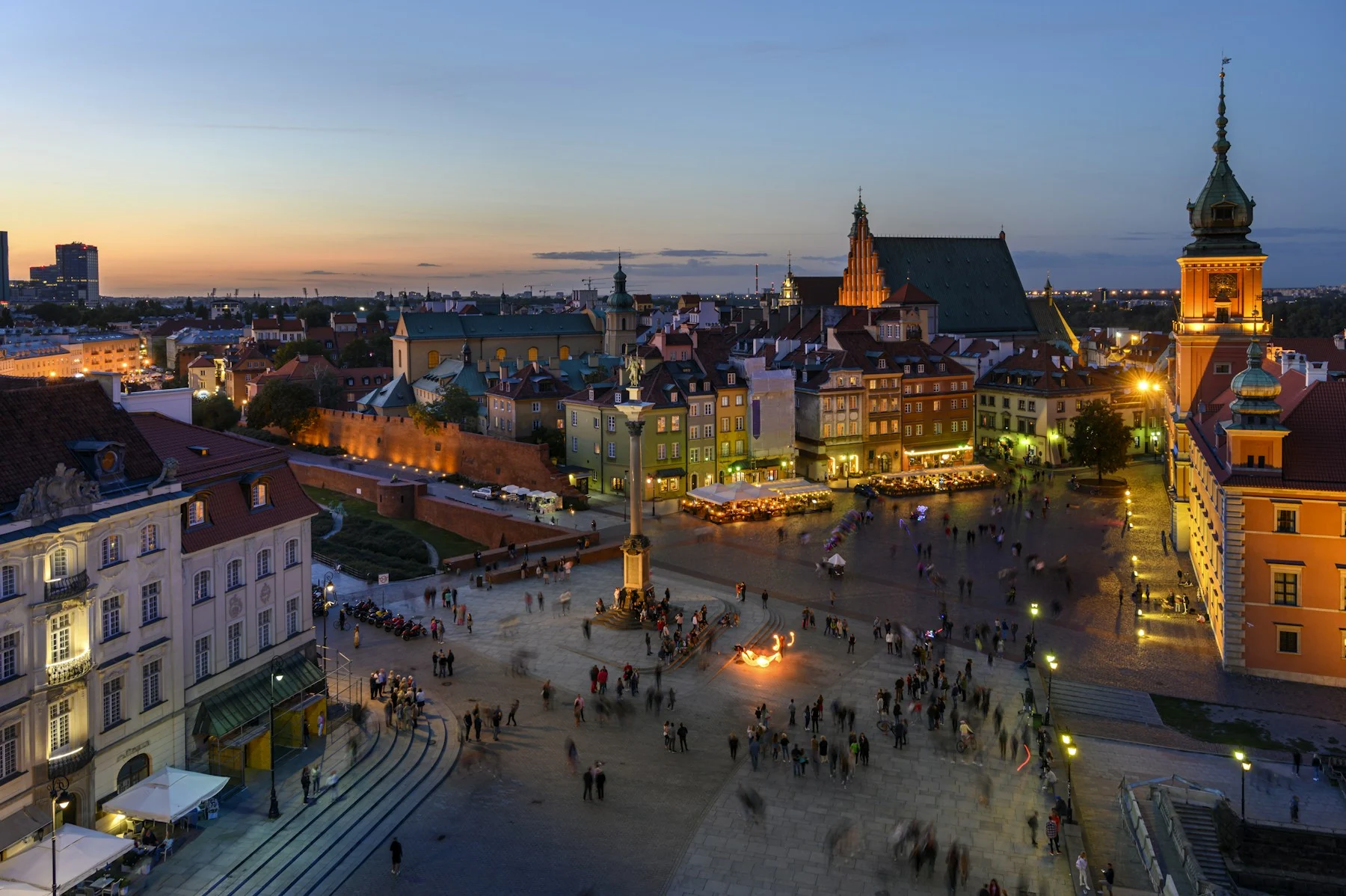
Big discoveries. Little pleasures.
Everything you are looking for in your city.
Choose your transport. Check the operator's current timetable or plan a door-to-door journey.
From leafy Wawer to lively Śródmieście.
Find your part of Warsaw.
We are returning to the idea of Warsaw Information from 2005, with fresh energy, new places and a city that surprises every day.
Where to dispose of waste, when to put out bulky items and how to handle environmental matters in Warsaw. Sorting, 5 PSZOK points, mobile collections, fees, reuse, air, greenery and grants. Choose a topic; each entry links to a verified source.
Workshops, walks and educational cruises. Find the current programme and registration in the organiser’s calendar.
Stationary point of selective collection of municipal waste.
Stationary point of selective collection of municipal waste.
Stationary point of selective collection of municipal waste.
Stationary point of selective collection of municipal waste.
Stationary point of selective collection of municipal waste.
Enter the name of the object in the city search engine. This is the shortest way to find the correct container or collection point, also for things made up of several materials. The missing waste can be reported to the search engine editor.
Put in dry and clean cartons, newspapers, notebooks and office paper. Fold the boxes, remove the foil elements. Fat paper, used handkerchiefs and paper towels go into mixed; drinks cartons in yellow. Don't throw in wallpaper or bags of building materials.
Place empty plastic packaging, cans, film and milk or juice cartons here. Empty the packaging; washing is not necessary. Do not put in electronics, batteries or packaging containing paint or engine oil residues. Keep bottles and cans with the deposit mark intact for return.
Put in empty bottles, jars and glass cosmetics packaging. Do not confuse packaging glass with ceramics, mirrors, window glass, heat-resistant glass or fluorescent lamps. These items require different disposal methods; search for the item by name in the search tool.
In Warsaw, put peelings, plant scraps, coffee or tea grounds and eggshells in loose, without a plastic bag. Do not add meat, bones, animal fats, dairy products, soil or animal droppings. Garden waste is collected separately as green waste.
Mixed waste includes residual waste such as used hygiene products, soiled paper, bones and meat scraps. Do not put electrical equipment, batteries, medicines, chemicals, rubble or green waste in it. Send worn-out clothing and textiles to separate collection.
Returns apply to packaging bearing the deposit mark: PET up to 3 l and cans up to 1 l (0.50 zł), and reusable glass bottles up to 1.5 l (1 zł). Do not crush them; keep the label. A receipt is not required. Collection points operate in large shops selling these drinks and participating small shops.
Good quality clothes for reuse; damaged textiles pass to PSZOK or MPSZOK. Separate clothing from household textiles. Do not treat the charity container as a basket for damaged items - check the rules of the recipient.
The collection points accept sorted waste from residents' households, delivered by the residents themselves. Check the rules and limits before loading. Do not bring waste from business activities.
Mobile collection points operate on Mondays, Wednesdays and Saturdays. The city list covers 70 locations; select the day, district and exact stopping time. The source contains schedules and maps for all stops. Check holiday exceptions before setting out.
The free Warszawa 19115 app shows PSZOK and MPSZOK collection points, electrical-waste collections, pharmacies accepting medicines and food-sharing points. Select a point on the map, check its rules and plan your journey.
Do not put mains- or battery-powered equipment in ordinary waste bins. Use collection points or arrange home collection of a large appliance with the operator. Agree on the conditions, completeness requirements and preparation of the equipment when booking.
Put portable batteries in designated containers, including those in public offices, municipal facilities and shops, or take them to PSZOK/MPSZOK. Do not leave a car battery by the bin shelter; choose the appropriate collection point. Tell staff about a damaged battery before handing it over.
Choose a pharmacy that participates in the city collection; the current list and map are in the source. Not every pharmacy runs the collection. Do not pour drugs into the sewers. Before visiting see if the chosen facility accepts the waste.
PSZOK accepts needles and syringes used for self-administering medication and monitoring blood parameters at home. Do not put them loose in bins or in a pharmacy’s medicine collection container. Agree with the collection point how to package and hand them over safely.
Pharmacies do not collect mercury thermometers. PSZOK and MPSZOK accept intact ones; broken ones must be delivered to PSZOK, safely secured in a tightly sealed container. Take fluorescent lamps to hazardous waste collection.
Take chemical residues to the appropriate collection point. Keep sealed, undamaged packaging with a label identifying the substance. Do not mix products or pour them down the drain. If the packaging leaks, contact staff before transport.
Edible oils and fats and used motor oils are collected separately. PSZOK also accepts cooking oil and oil from garden tools in a sealed replacement container without the original label. Do not pour oil into the sink.
Rubble, concrete and ceramics from do-it-yourself home renovations require separate collection. MPO sites state a limit of 200 kg per single delivery on a given day. Arrange larger renovations with an authorised waste collector. A contractor’s renovation waste does not become waste accepted from a resident merely because it was generated in a home.
PSZOK does not accept asbestos, roofing felt, construction polystyrene, mineral wool, PUR foam, photovoltaic panels or fuel. Arrange collection with an authorised company or the manufacturer or distributor of the relevant product. Do not leave this waste beside the communal bin shelter.
Take household tyres to PSZOK; at MPO sites, the limit is 4 tyres in a single delivery on a given day. MPSZOK does not accept them. Car parts do not belong in the neighbourhood bulky-waste collection - arrange collection with an appropriate specialist facility.
Asbestos requires a separate removal and disposal process; neither PSZOK nor MPSZOK accepts it. Check the city procedure and possible grant before starting the work. Removal alone of waste already lying on the property is not covered by the specified grant.
Enter the street and building number or postcode. Check paper, glass, metals and plastics, BIO, mixed waste, bulky waste and green waste separately. The schedule covers waste collection sites assigned to the address. You can set reminders in the Warszawa 19115 app.
Put them out at the location specified by the building manager, generally no earlier than 72 hours before collection. Outside the collection date, you can use PSZOK. Washing machines, fridges, bathtubs, rubble and tyres are not part of this collection.
Green waste is collected all year. From March to November: every two weeks for single-family houses and weekly for multi-unit buildings; in winter, every four weeks. Check the date for your address. Put out Christmas trees without decorations, soil or pots.
Prepare the address, waste category, scheduled collection date and a description of the problem. Report it through Warszawa 19115 - the portal, app or phone number 19115. This is also the way to report problems with delivery or replacement of bins.
The current city directory lists contractors for all 18 districts. Open the source and find your district; operator details may change with contracts. Check the address-specific schedule for your building’s collection dates.
Checked on 27.10.2026: 85 zł per household per month in multi-unit housing or 107 zł in a single-family home. The composting reduction for an eligible single-family home is 9 zł. Incorrect sorting may result in double the rate. The city provides details and updates.
Choose the form for the property type and relevant period. The city publishes current forms and instructions. The declaration can also be prepared through the Moja Warszawa portal. For a flat in a housing community or cooperative, agree the billing method with the manager.
Follow the payment instructions in the municipal service information sheet and use the correct account number provided by the authority. The Moja Warszawa portal supports payments for amounts owed to the city. In a housing community or cooperative, ask the administrator about settlement.
Composting allows you to use waste in the garden. If you declare a composter and use a partial exemption for a single-family house, the city does not provide BIO or green waste collection. Check the exemption conditions and composter-location requirements.
A PSZOK for residents does not replace a business’s waste-management arrangements. Clarify collection, record-keeping and BDO registration duties for your activity. The city information explains electronic registration and identifies the competent regional marshal’s office.
The city’s directory lists locations and opening hours of community fridges or food-sharing cupboards. Donate food fit for consumption in clean, sealed packaging. Label homemade meals with their ingredients and preparation date. Do not leave spoiled products or products past their use-by date.
Before throwing away a thing, assess whether it can be repaired or used again or passed on to someone else. Receivers of gifts have their own rules: prior to that, determine the state, completeness and method of delivery. Only things that are not suitable for use are directed to the proper collection.
Schronisko na Paluchu has stopped accepting textiles other than blankets. Do not bring just any duvets, pillows, mattresses or carpets. Check the current list of needs before preparing donations; items should be clean and useful for animals.
Warsaw publishes notices about extra clothing and textile collections. Check the location, day and required condition of the items; collecting items for reuse has different rules from collecting damaged textiles. Do not leave bags outside the collection event's hours.
Check the Warsaw Air Index, city network of sensors and GIOŚ stations. The results have their own time of measurement and range of representativeness; open current data before leaving. The city site leads to a map and explains the indicator.
How to report a nuisance depends on its source: neighbours, traffic, construction or an industrial plant. Give the location, time, frequency and type of nuisance. The city’s guidance identifies the relevant services; contact Straż Miejska on 986 to request an intervention for an ongoing incident.
See long-term noise levels from roads, railways, trams, aircraft and industry on the city map portal. The map is based on modelling - it does not show live noise readings or individual events.
Before removing a tree, check whether notification or a permit is required. The procedure depends on the property and the reason for removal. Applications and decisions concerning trees can be found on the city’s green-space map. Report damage to greenery through Warszawa 19115.
The “Plant a Tree” feature in the Warszawa 19115 app lets you suggest a planting location. You must be at the chosen location. The proposal goes to the green-space manager for analysis; submitting it does not mean it will automatically be implemented.
Information on Warsaw's greenery, parks and the manager's activities is available from Zarząd Zieleni. Browse walking spots and forests in the Parks and Greenery section. Check the manager's notices for maintenance works and restrictions.
Mark the exact location and describe the problem in Warszawa 19115; attach a photo if possible. You can also call 19115 for information and referral to the responsible unit. For an incident requiring immediate intervention by Straż Miejska, use 986.
For investments in Warsaw, the city offers up to 80% of costs: at most 4 000 zł for individuals and 10 000 zł for other entities outside the public finance sector. Applications for 2027: 1.09.2026-31.03.2027. First the contract, then implementation and settlement.
The city programme covers selected heat pumps, solar collectors, photovoltaic systems and wind turbines; additional support for energy storage is linked to a PV or wind installation. Applications for 2027: 1.09.2026-31.03.2027. Start work after signing the agreement.
The programme covers removing at least 200 m² of sealed surfaces and replacing them with greenery. Grant: up to 70% of costs, maximum 150 000 zł. Applications for 2027: 1.09.2026-31.03.2027. Read the exclusions and requirements before planning the work.
The city programme can cover up to 100% of the actual costs of an eligible investment to remove and dispose of asbestos. Applications for 2027 are open from 1.09.2026 to 31.03.2027. Check the required documents and rules before commissioning the work.
The municipal funding catalogue also covers boiler-room modernisation, the Czyste Powietrze programme and removal of sealed sewage holding tanks with construction of a sewer connection. Choose the service description and check current applications, eligibility and the order of formalities.